
Radical Hysterectomy for Gynaecological Cancers
Minimally Invasive Cancer Surgery
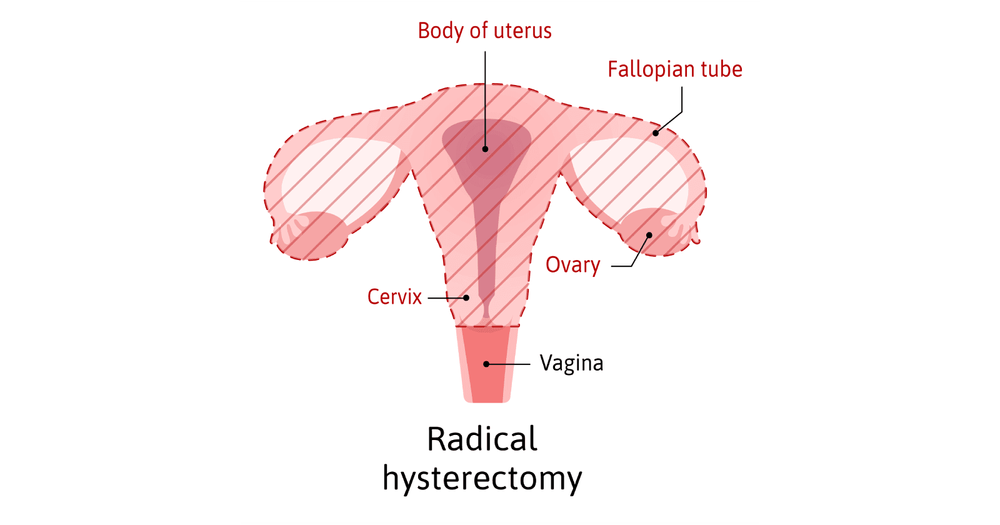
A radical hysterectomy is performed for early-stage gynaecological cancers. It involves removal of the uterus, cervix, nearby tissues, and lymph nodes.
Indications
• Early-stage cervical or endometrial cancer
• Vaginal or lower uterine segment malignancies
● Ovarian or fallopian tube malignancies
Surgical Approach
• Laparoscopic / Robotic-assisted surgery for precision and reduced recovery time
• Pelvic lymph node assessment: sentinel mapping or full dissection
Benefits
• Evidence-based approach
• Less pain and quicker return to daily life
• Multidisciplinary care and follow-up support
Recovery Timeline
• Hospital stay: 2–5 days
• Light activity: 2–4 weeks
• Full recovery: ~6–8 weeks
Laparoscopic /Robotic Sacrocolpopexy (Vault Suspension)
Restoring Pelvic Support After Hysterectomy
Sacrocolpopexy is a gold-standard procedure to treat vaginal vault prolapse using mesh to restore pelvic anatomy.
Indications
• Vaginal vault prolapse post-hysterectomy
Surgical Approaches
• Laparoscopic Sacrocolpopexy
• Robotic Sacrocolpopexy (for advanced precision)
Benefits
• Restores anatomy and vaginal function
• Preserves sexual and urinary health
• Faster recovery and minimal discomfort
Recovery
• Hospital stay: 1–2 days
• Return to normal activities: 2–4 weeks
• Avoid heavy lifting for 6–8 weeks